
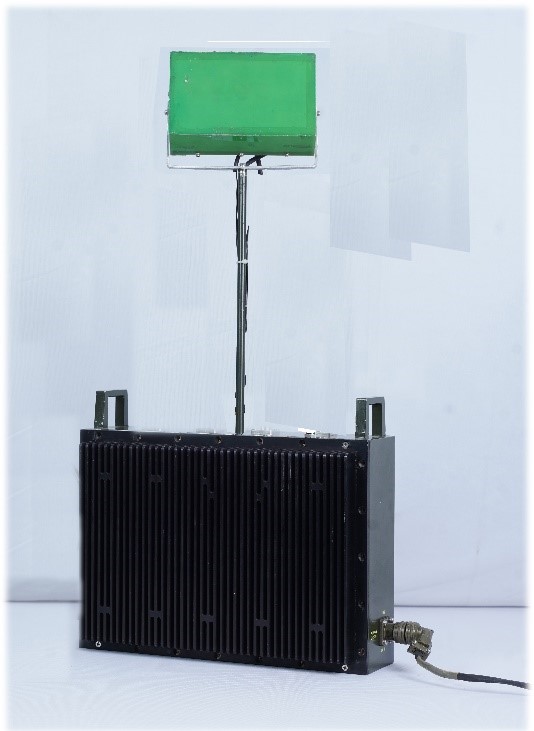
Core Features
Anti-drone jamming systems play a crucial role in safeguarding against unauthorized drone activities. Developing nations face unique security challenges due to limited resources and budget constraints.
- Range: Up to 1.5 kilometers .
- Jamming Capabilities: Disrupts drone control signals and GPS navigation.
- Accuracy and Precision: Utilizes directional antennas for precise targeting and also Omni antennas in certain scenarios
- Scalability and Flexibility: Can be deployed in various configurations, including fixed and portable setups and integrated within Command and Control structure..
- Legal Compliance: Operates within regulatory guidelines.
- The System is designed to Block RF signals of Drones up to a distance of 1km with OMNI and 1.75km with directional antenna
- Can operates on +230V AC.
- Can be adopted for use on external DC +28V.
- Provision of LED indications and safety warnings.
- Compact and highly portable –Can be deployed at short notice any where easily
- Can be set up as a drone shield by deploying at vantage positions for complete protection of skies above VA/VP .
Risks with Drones
- Drones – also known as an Unmanned Aerial Vehicle (UAV) are finding many applications in supporting economic and social activities and are bound to expand continuously.
- The low flying small in size and easy to use drones pose a formidable challenge to the society and security forces adding a new dimension in Security and Defence
- With the increase in the incidents of drone incursions, there is an urgent necessity to adopt safety measures against drone threats by every organization involved in defence and VVIP /VIP security.
- There are several anti-drone technologies available in the environment but they do not offer absolute complete solutions in the field and are far too expensive.
- Security risks related to unauthorized drone activities are on rise regularly reported in India too.
List of Industries Needed Anti-Drone Jammer:
Border Security: Drone incidents related to smuggling of contraband material or conducting illicit surveillance.
Critical Infrastructures: Airports, power plants, and government buildings, places of worships and fuel dumps are becoming easy targets and more vulnerable to drone attacks.
Public Safety/Privacy: Drones pose threats to public gatherings, events, and sensitive locations at times invade personal privacy. Local police are not fully equipped to handle these cases.